

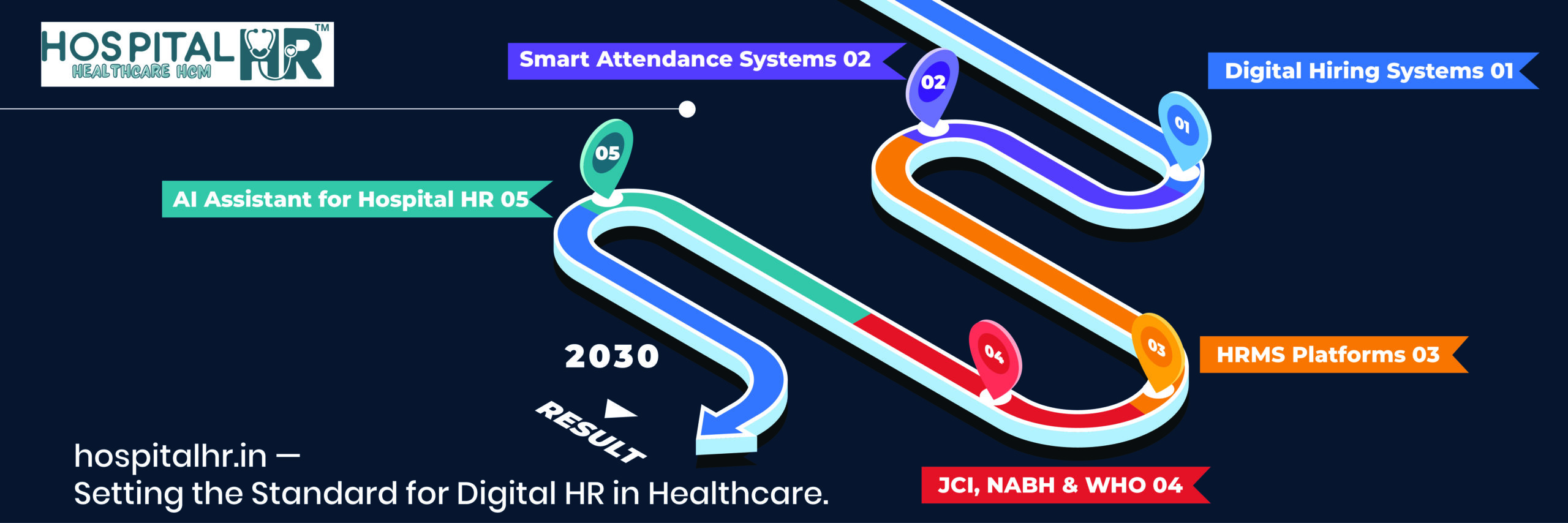

The healthcare industry is undergoing massive transformation—and Hospital HR is at the center of this change. As hospitals adopt digital tools, automation, and AI-driven systems, HR teams must evolve from traditional administrative roles to strategic, technology-powered partners.
By 2030, hospitals that modernize their HR processes will experience stronger compliance, better patient care, reduced staff burnout, and higher operational efficiency.
This roadmap highlights the key HR technologies hospitals must invest in today to stay future-ready.
1.AI-Powered Recruitment & Digital Hiring Systems
The future of hospital hiring is fully digital.
AI-enabled systems can:
- Scan thousands of resumes in minutes
- Identify skill gaps instantly
- Match candidates to roles using intelligent algorithms
- Reduce hiring time from weeks to hours
For hospitals that recruit doctors, nurses, technicians, and support staff frequently, AI-based hiring creates a faster, more accurate recruitment process.
2.Smart Attendance Systems with Biometrics & Geofencing
By 2030, outdated attendance registers will disappear.
Hospitals are switching to:
- Facial recognition attendance
- Biometric verification
- Mobile geofencing for multi-location staff
These systems reduce time theft, ensure accurate shift tracking, and improve workforce discipline—especially important in 24/7 hospital environments.
3.Digital HRMS Platforms to Centralize All HR Operations
A modern HRMS allows hospitals to manage everything from one place:
- Employee records
- Payroll processing
- Shift management
- Performance tracking
- Leave & overtime
- Statutory compliance
This reduces administrative workload and eliminates human errors.
4.Automated NABH & JCI Compliance Management
Compliance is one of the most challenging areas in hospital HR.
By 2030, digital tools will automate:
- Document management
- Policy updates
- Training records
- Audit preparation
- Attendance & credential verification
This ensures hospitals are always audit-ready and reduces the risk of compliance failures.
5.Predictive HR Analytics for Manpower Forecasting
Hospital staffing needs change daily.
Predictive analytics can analyze:
- Patient flow data
- Seasonal trends
- Staff performance
- Overload patterns
With this, HR teams can forecast staffing requirements before shortages happen, improving both patient care and staff well-being.
6.AI-Driven Employee Training & Skill Development
Continuous training is essential for healthcare.
AI-powered learning platforms will provide:
- Personalized training paths
- Skill-gap detection
- Real-time performance insights
- Automated competency mapping
This helps hospitals maintain a highly skilled, confident, and compliant workforce.
7.Employee Wellness & Burnout Monitoring Tools
Burnout is one of the significant challenges in healthcare.
New tools use AI to track:
- Workload stress levels
- Overtime patterns
- Emotional fatigue
- Overall well-being
This allows Hospital HR to take early action to support employees—leading to improved morale and reduced attrition.
8.Digital Onboarding & Paperless Documentation
Hospitals waste hours on manual onboarding.
By implementing digital onboarding, HR can:
- Automate joining formalities
- Collect documents online
- Provide e-training modules
- Assign first-week tasks automatically
This improves productivity and reduces paperwork.
9.Unified Global Healthcare Standards: JCI, NABH & WHO Will Move Toward Standard Alignment
By 2030, international bodies like WHO, along with accreditation authorities such as JCI and NABH, are expected to move toward standardized global healthcare benchmarks.
This means:
- Harmonized patient safety protocols
- Common digital documentation standards
- Unified emergency response frameworks
- Cross-border training and certification models
Hospitals will follow more globally synchronized compliance norms, making international accreditation easier and more transparent.
10.AI-Based Global Compliance Monitoring & Real-Time Audit Readiness
Accreditation systems will no longer depend on manual audits.
WHO, JCI & NABH are predicted to introduce AI-powered compliance monitoring tools, enabling hospitals to:
- Track documentation in real time
- Auto-flag safety or policy deviations
- Receive instant guidance for corrective actions
- Maintain 24/7 audit readiness
Hospitals will move from “preparing for audit” to always being audit-ready, supported by automated reporting dashboards and digital assessors.
Conclusion: The Future of Hospital HR Is Digital
By 2030, the most successful hospitals will be the ones that invest in technology-driven HR systems today. Digital tools will not only improve operational efficiency—they will also enhance patient care, support staff well-being, and strengthen compliance.
Hospital HR – Setting the standard for Digital HR in Healthcare.