


Introduction
Hospitals are people-intensive, not just infrastructure- and equipment-intensive. When the medical and support staff of a hospital feel that they are being supported in their personal and professional development, the overall performance of the hospital and the quality of patient care improve. Coaching and mentoring programs are excellent tools for the HR departments of hospitals to create such a supportive and high-performing environment.
Coaching and Mentoring: What’s the Difference?
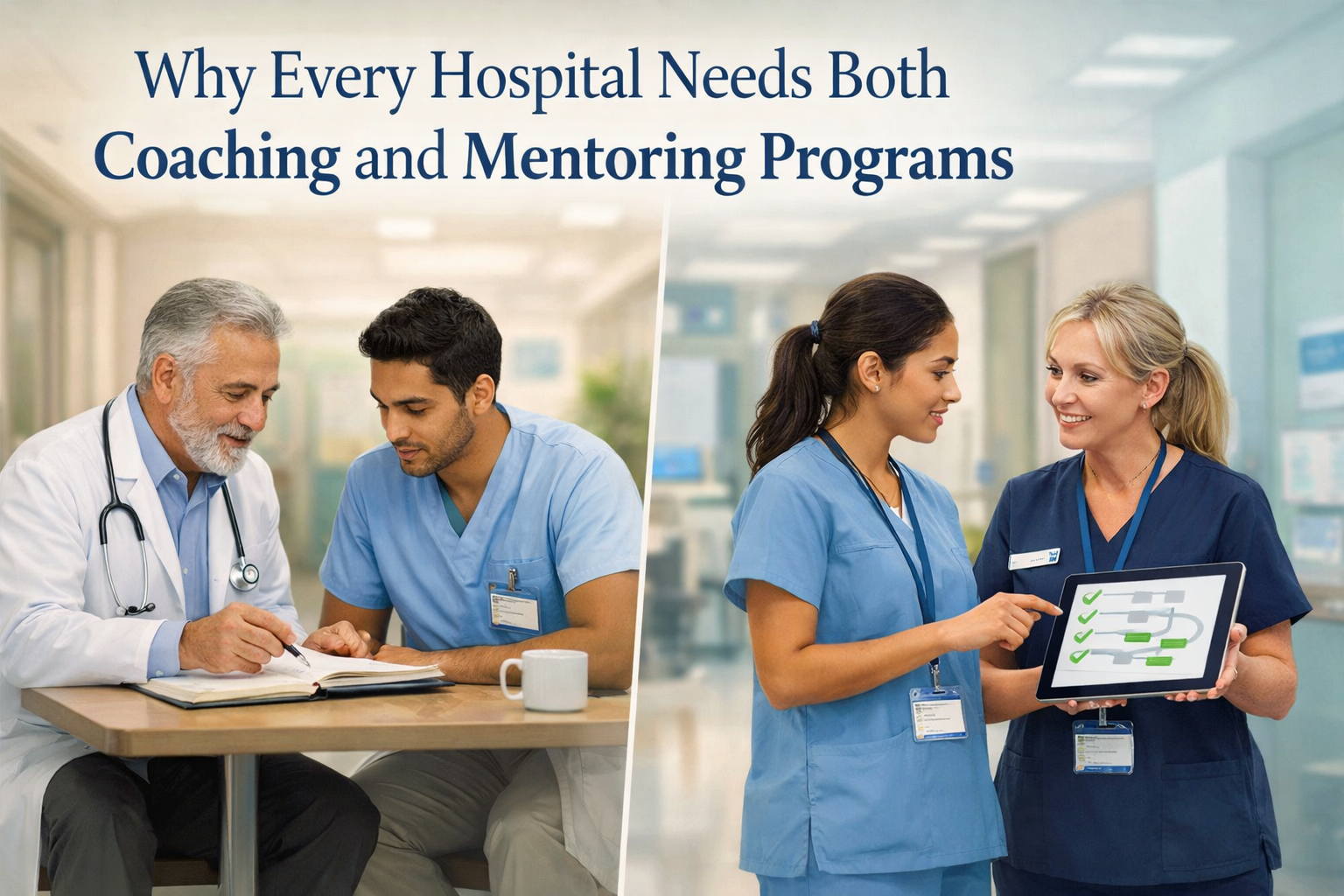
In the context of a hospital, coaching is more about enhancing certain skills or performance within a short time frame. For instance, a nurse may be coached on how to deal with a new medical procedure or work with a new computer system. On the other hand, mentoring involves a long-term relationship between an experienced professional and a junior colleague on matters related to career, professional identity, and work-life balance.
Coaching sessions are more goal-oriented, with discussions cantered around specific objectives, feedback, and outcome measurement. Mentoring sessions are more free-flowing, with topics ranging from leadership, stress management, and hospital politics. Both activities are complementary to each other, with coaching being more about enhancing day-to-day performance and mentoring being more about long-term development.
Why Hospitals Need Both?
1.Improved Patient Care and Safety
- When employees are specifically coached on their skills and procedures, the “know–do” gap closes, and patient care improves.
- Coached professionals feel more confident in their decision-making and teamwork, which helps to provide safer, more coordinated patient care.
2.Increased Employee Engagement and Retention
- Healthcare professionals who feel invested in through training and development programs are more likely to remain with the organization.
- Coaching gives them someone to discuss their concerns with, while mentoring lets them know that the hospital cares about their performance and future.
3.Leadership Development and Succession Planning
- Hospitals require a constant stream of future leaders—both clinical and non-clinical.
- Coaching can help future leaders develop skills such as communication, feedback, and conflict resolution. Mentoring introduces them to real-world leadership dilemmas, politics, and strategic thinking that are not taught in medical or nursing school.
4.Enhancing Digital and Process Change
- The healthcare industry is rapidly embracing electronic medical records, telemedicine, and data analytics for better patient care. Coaching is a powerful tool for quickly training employees to use new technology and processes.
- Mentoring can then help employees cope with the stress of change, keep their spirits up, and connect new technology to long-term career goals.
The Role of Hospital HR
The hospital HR is uniquely positioned to implement these initiatives. The hospital HR can:
- Identify the target groups (new nurses, first-time supervisors, high-potential doctors, allied health professionals).
- Train senior clinicians and managers on basic coaching and mentoring skills.
- Match mentors and mentees based on objectives, specialties, and availability.
- Establish simple structures: clear goals, regular meetings, and confidentiality guidelines.
- Monitor outcomes such as engagement scores, turnover, promotion rates, and patient feedback.
When the HR department considers coaching and mentoring as strategic resources, rather than “additional activities,” they will become ingrained in the culture of the hospital.
Simple Blueprint to Start a Program
A hospital does not require a complicated framework to initiate. A simple blueprint to initiate could be:
- Start a mentoring program for new employees in key departments (ICU, emergency, oncology) with 6-12-month long pairings.
- Provide short-term coaching sessions (for instance, 3-6 sessions) for specific objectives such as time management, communication with patients, or learning new software.
- Reward mentors and internal coaches with certificates, feedback scores, or career advancement points.
- Eventually, feedback from employees can help the HR department formalize policies, incorporate these programs into performance management, and develop them for more employees.
Conclusion
In today’s hospitals, coaching and mentoring are no longer “nice to have” activities but are instead critical components of a strong, competent, and loyal staff. By integrating coaching with mentoring, the HR department of Hospital can enhance employee performance, decrease burnout, and ultimately provide better care to all patients.
Dr. Hari Prasad. N
Good Content
FDMA
Thank you,